

This entry is part 44 of 44 in the series Letters from Indochina

October 2, 2025

Land of a Million Elephants

By Simon J. Lau

Laos sits in the heart of Southeast Asia, tucked between Thailand, Vietnam, China, Myanmar, and Cambodia. It’s the region’s only landlocked nation, shaped by forested mountains and winding rivers. Centuries ago it was known as Lan Xang, the “Land of a Million Elephants,” a kingdom where elephants stood at the center of cultural and national identity. Though only a fraction remain today, the symbol endures in folklore, temples, and the country’s imagination.

I chose to spend my final day at MandaLao, a sanctuary outside Luang Prabang that offers a different vision of elephant tourism. Instead of rides or performances, the refuge provides Asian elephants a safe home after years of hard labor. For visitors, the experience is intimate and instructive, a chance to walk beside these animals while learning about their history, the dangers they face today, and the fragile efforts to protect them.

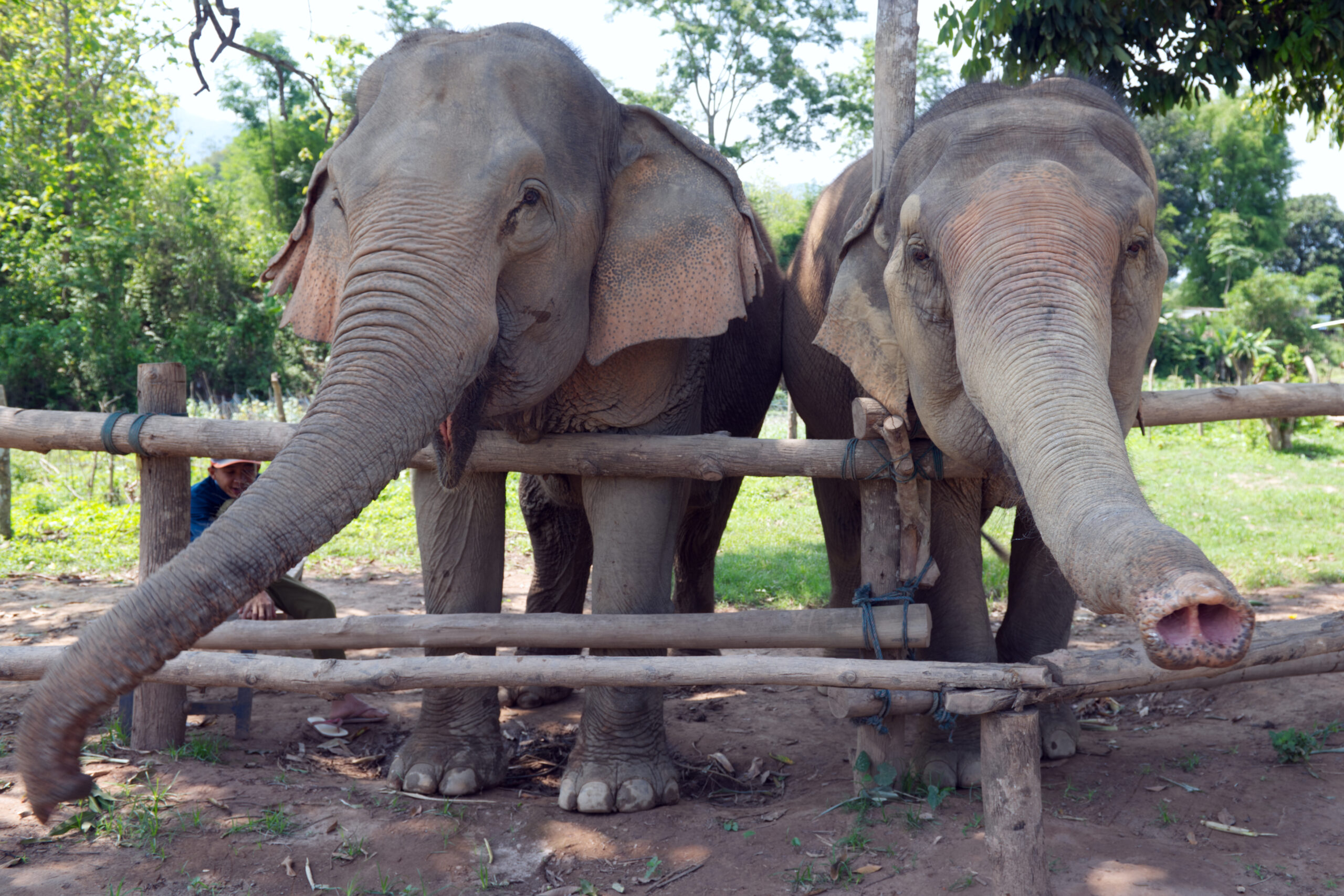
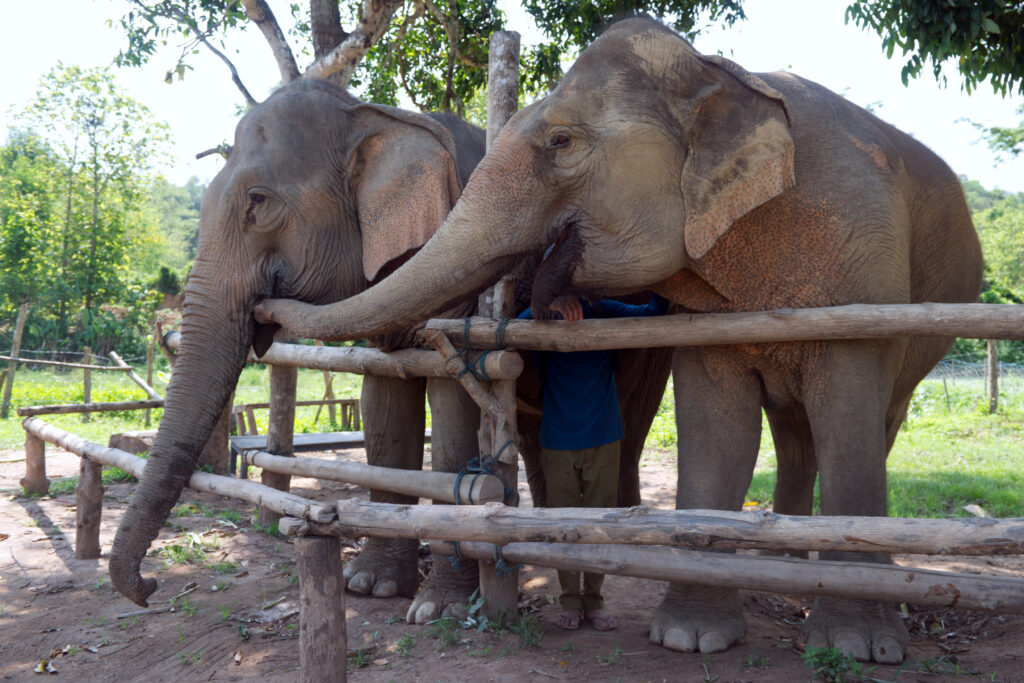
The two elephants I met, Khammoun and Nuann, were rescued from harsh conditions. Khammoun spent years in the logging industry, where elephants still haul heavy timber through remote stretches of jungle. For many owners, elephants are cheaper than machinery in places where fuel is costly and roads are unreliable. The work is exhausting, and elephants can spend long days dragging felled trees across uneven terrain with little rest. Injuries are common.

Nuann, on the other hand, was used for elephant rides, where trainers often rely on harsh methods for control. Tourists may see a peaceful scene, but behind that veneer these animals endure restraints, isolation, and physical coercion. They haul visitors in heavy metal chairs strapped to their backs, walking the same worn routes with little shade or relief. Both industries have long relied on elephants, but the toll on their health and well-being is severe. In recent years, the Laotian government has begun imposing tighter restrictions on logging and elephant tourism, though enforcement remains inconsistent.

Our guide explained that to save these elephants, MandaLao must purchase them outright from their owners. Prices range from $30,000 to $45,000 USD for an adult, and often double for an adolescent with decades of potential labor ahead. It’s an enormous cost for a sanctuary with limited resources, but one that is slowly making a difference.

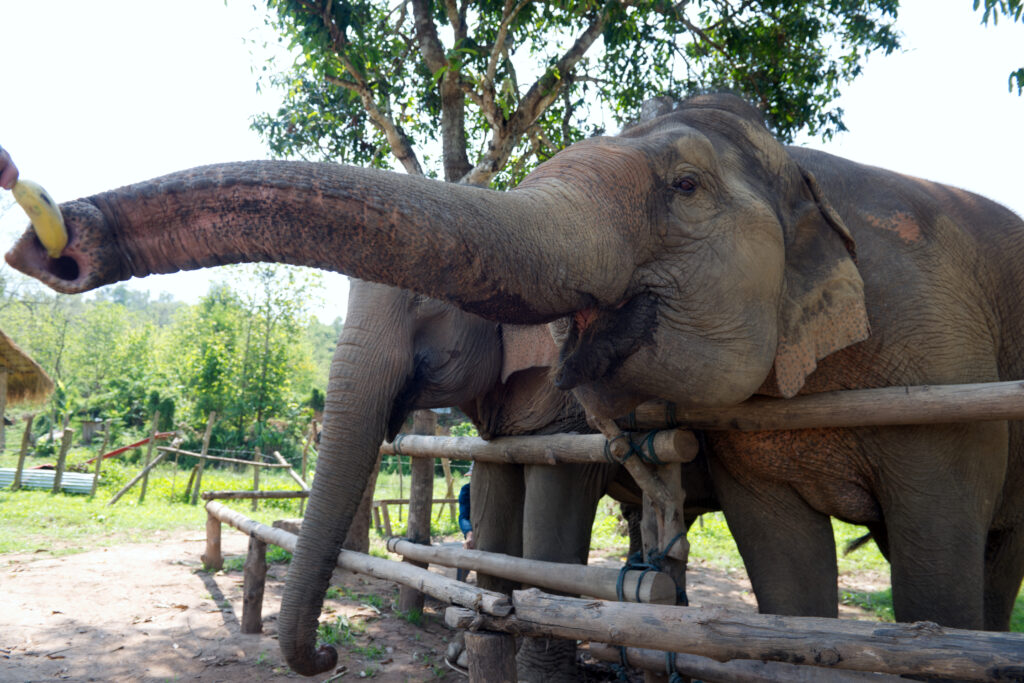
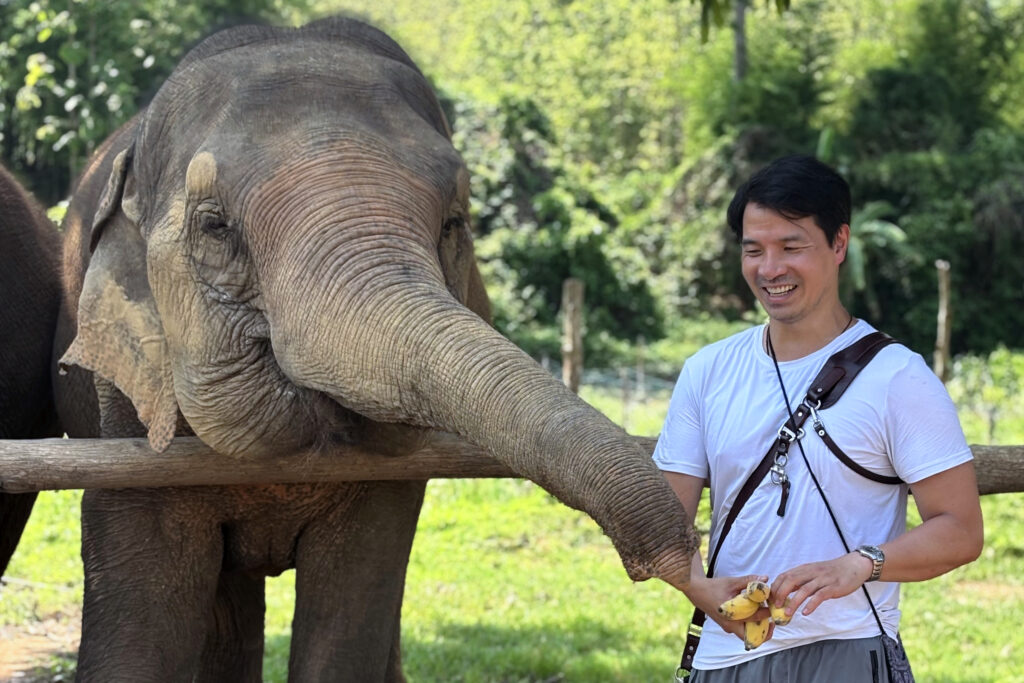
We spent the first part of the day learning about Asian elephants and feeding them, which quickly illustrated just how much they eat. On average, elephants eat about 6% of their body weight and can spend up to 19 hours a day eating and foraging. For a 4-ton adult, that’s nearly 500 pounds of food every single day. Their diet is a steady mix of grasses, leaves, and the small, sweet Southeast Asian bananas I came to love. They’re richer and sweeter than the bananas I’ve grown accustomed to back home, and the elephants devoured them the moment we held one out.

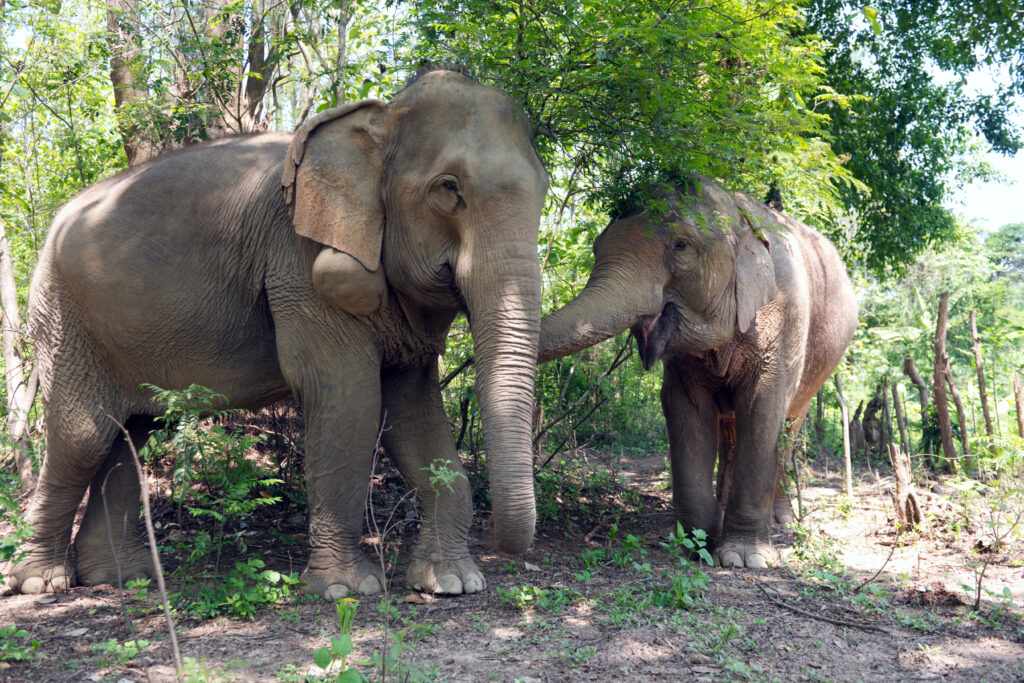
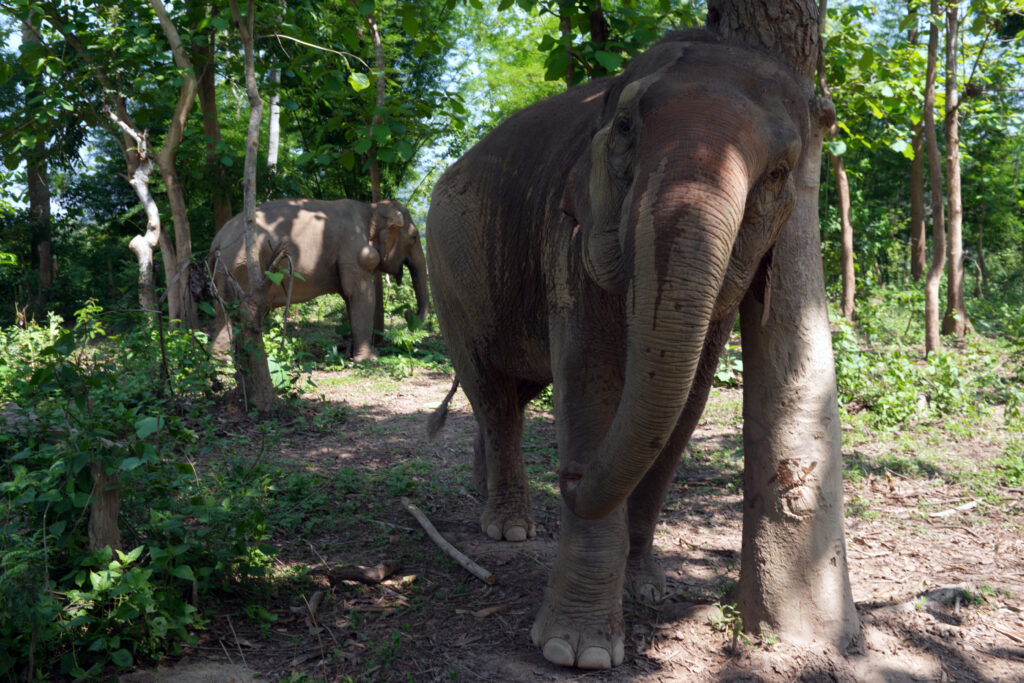
After feeding, we walked with them through MandaLao’s forested grounds, watching as they foraged freely, pulling down branches, stripping leaves, and grazing constantly. That kind of appetite is why sanctuaries need so much support. MandaLao has even had to buy out crops from nearby farmers just to feed its modest twelve-member herd.

Each elephant also comes with a mahout, a lifelong caretaker whose bond with the animal is deep and essential. When MandaLao rescues an elephant, the mahout comes too. After years of working side by side, elephants grow dependent on a steady voice and familiar presence. Our guide told us about a mahout who once walked away after a pay dispute. The elephant grew agitated, refused commands, and became difficult to control. The sanctuary eventually brought the mahout back at a higher salary. The story made it clear that caring for elephants requires more than just food and water. It takes trust, continuity, and a genuine human connection.

Elephants are also highly social animals, but their circles are usually limited to close family members. Since Khammoun and Nuann were not related, no one initially knew whether they would accept each other. Their connection grew quickly, and it became clear that even without blood ties, elephants can choose their companions with intention and loyalty.

In many ways, they reminded me of dogs, especially in how food-driven they are and how vividly their personalities shine through. It was endearing to watch them touch trunks, linger side by side, and, in one moment, for Nuann to steal a banana straight from Khammoun’s mouth. The scene reminded me of my two dogs, who I like to call “faux brothers.” These two? Without question, faux sisters.

As I left MandaLao, it struck me how closely the sanctuary’s work ties into the larger story of this country. Once, elephants shaped the life and identity of this land. Today, however, fewer than 400 wild elephants remain. Efforts like those at MandaLao offer hope that Laos might one day live up to that legacy again, not only in name, but in reality.

Prev Letters from Indochina (Part 43)
Next The Shared Space Between Us

Comments are closed.