April 2, 2025
Letters from Indochina (Part 3)
By Simon J. Lau
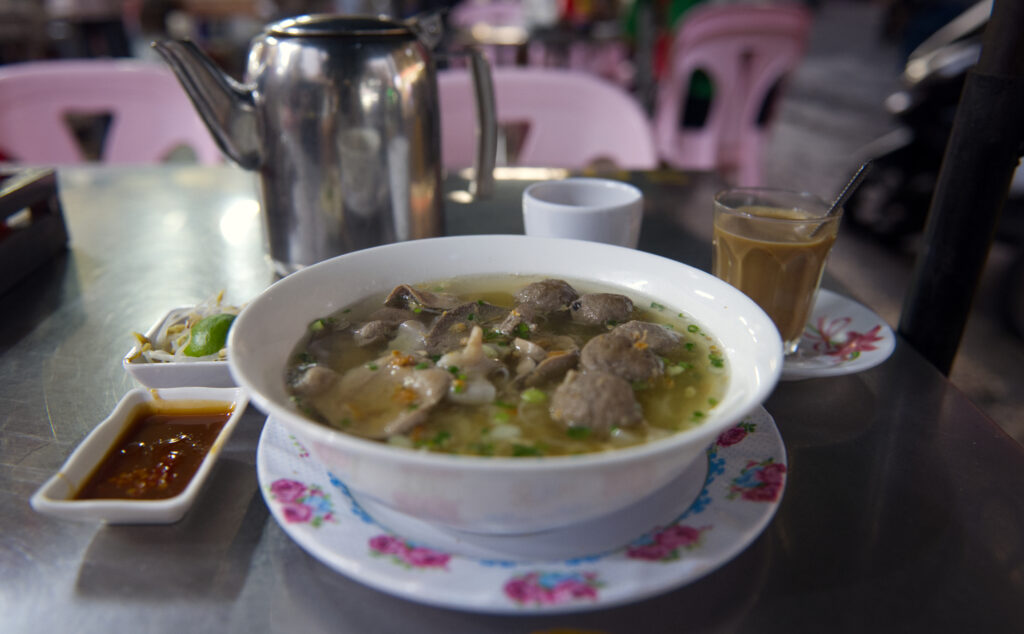
This morning, I returned to what’s become my favorite breakfast spot and ordered pho along with three of the tiny Vietnamese-style coffees. Still, both the waiter and waitress laughed. They were clearly amused that anyone could drink that many cups. As I paid, I shared a translated note with them: “Coffee here is good, although the glasses are just too small for an American. 🇺🇸” I didn’t want them thinking I was some kind of weirdo. It’s not me, it’s the American in me.
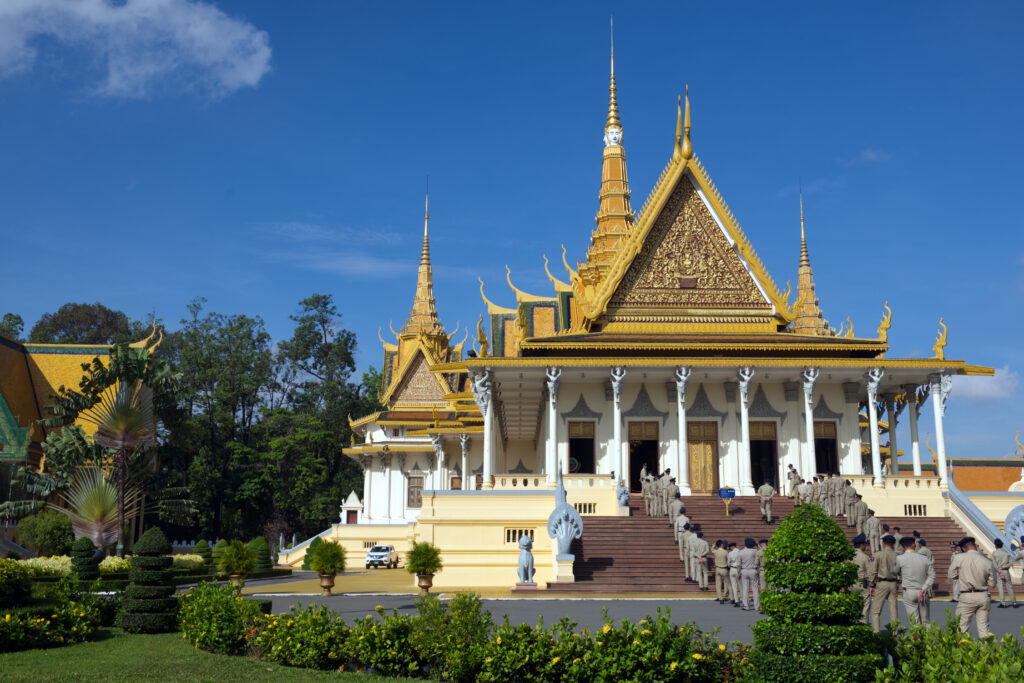
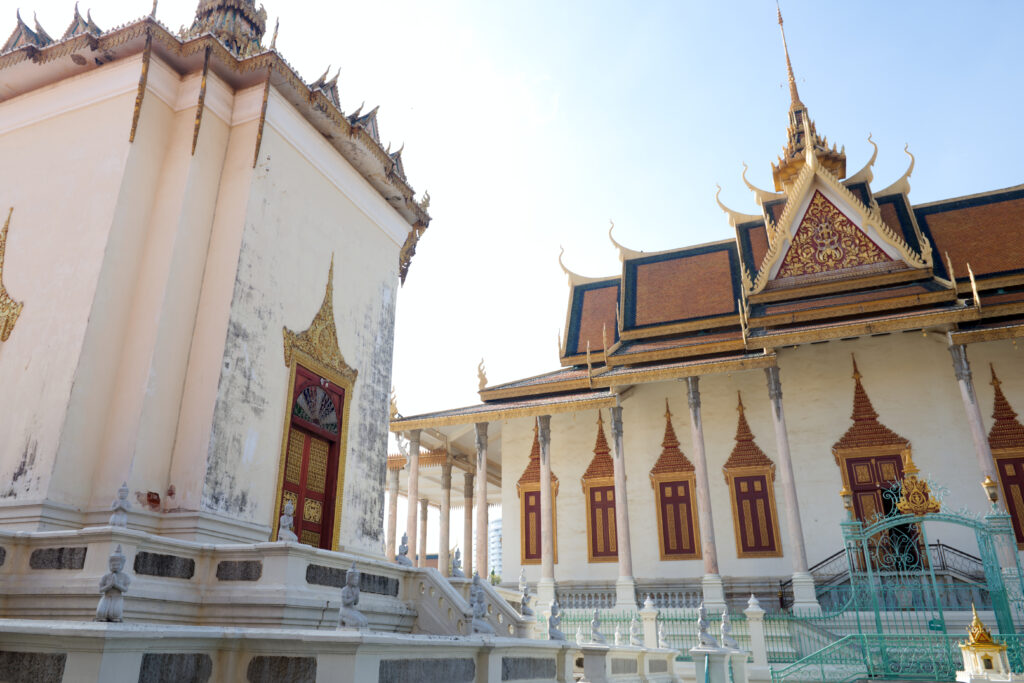
Later, I visited the Royal Palace, a grand complex along the riverfront and in the heart of Phnom Penh. It has served as the residence of Cambodia’s kings since the 1860s. While the original palace was mostly demolished, it was rebuilt in the early 20th century. With its golden roofs, manicured gardens, and classic Khmer architecture, it remains one of the city’s most iconic landmarks.
Getting in was a bit of a challenge. There wasn’t a clearly marked entrance, so I ended up walking the entire perimeter of the complex, easily twenty city blocks. I eventually found the main gate, but from the outside, it was surprisingly inconspicuous. Also, with hardly any visitors today, there was no line or crowd to signal the entrance. In fact, a few of the side gates had more foot traffic than this so-called “main” entrance.
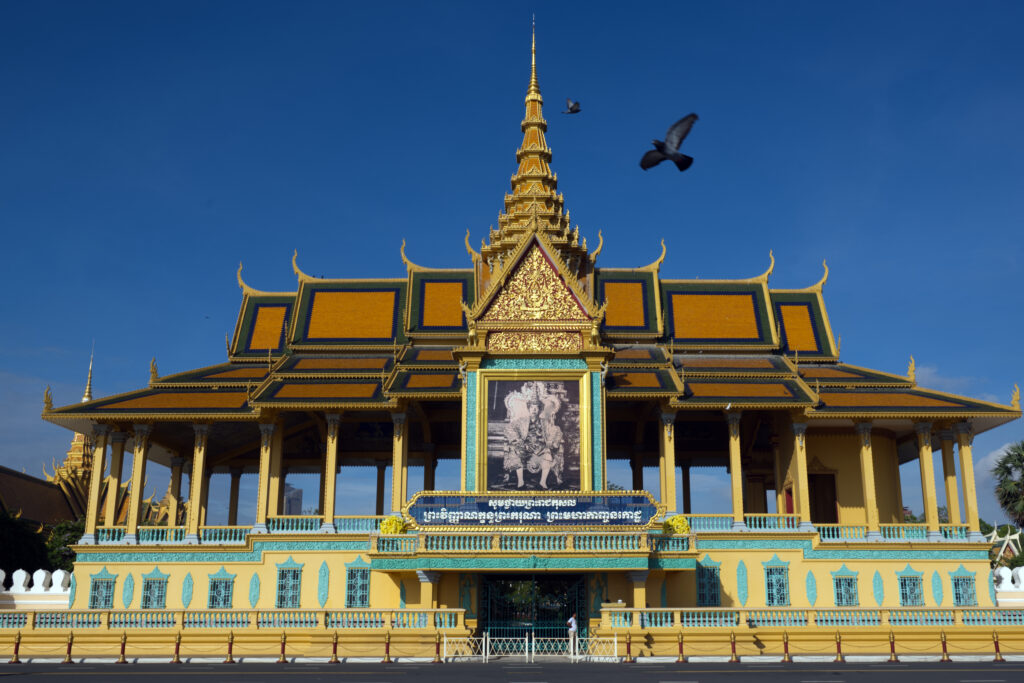
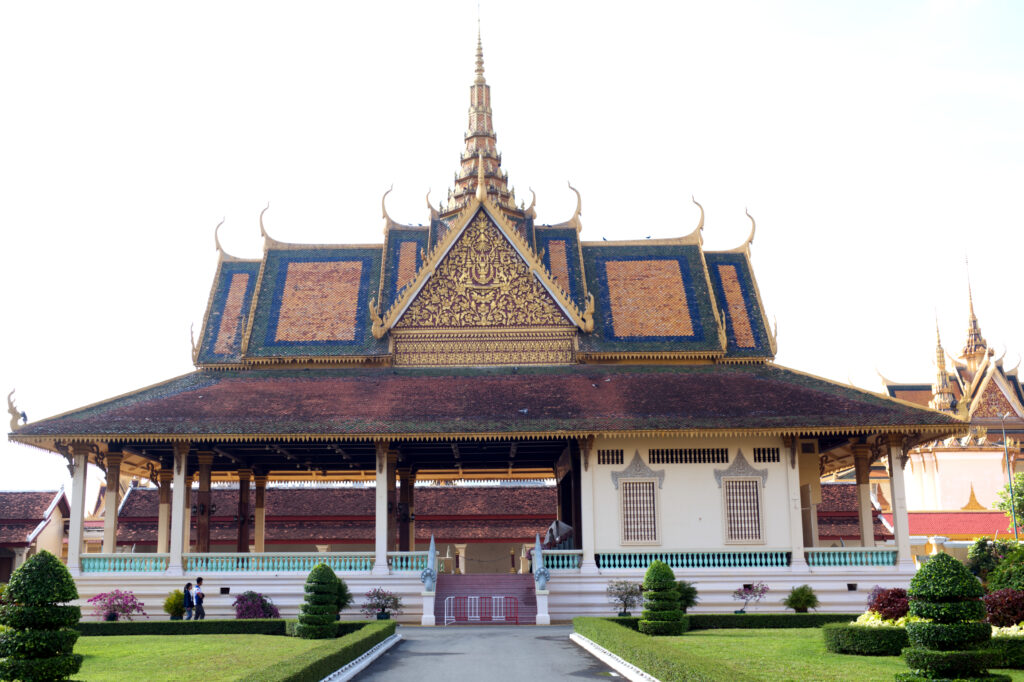
One of the highlights of the palace grounds is the Moonlight Pavilion, an open-air structure with a gleaming golden roof that faces the riverfront. Up close, it feels almost like a royal stage set. Traditionally, it’s been used for royal ceremonies, dance performances, and other official functions. While visitors aren’t allowed inside, it’s easily admired from the lawn entrance.
Beyond the Moonlight Pavilion, several other landmarks across the palace grounds caught my attention. First is the Silver Pagoda, named for its floor made of over 5,000 silver tiles. It houses some of Cambodia’s most sacred treasures, including a life-sized gold Buddha encrusted with diamonds.
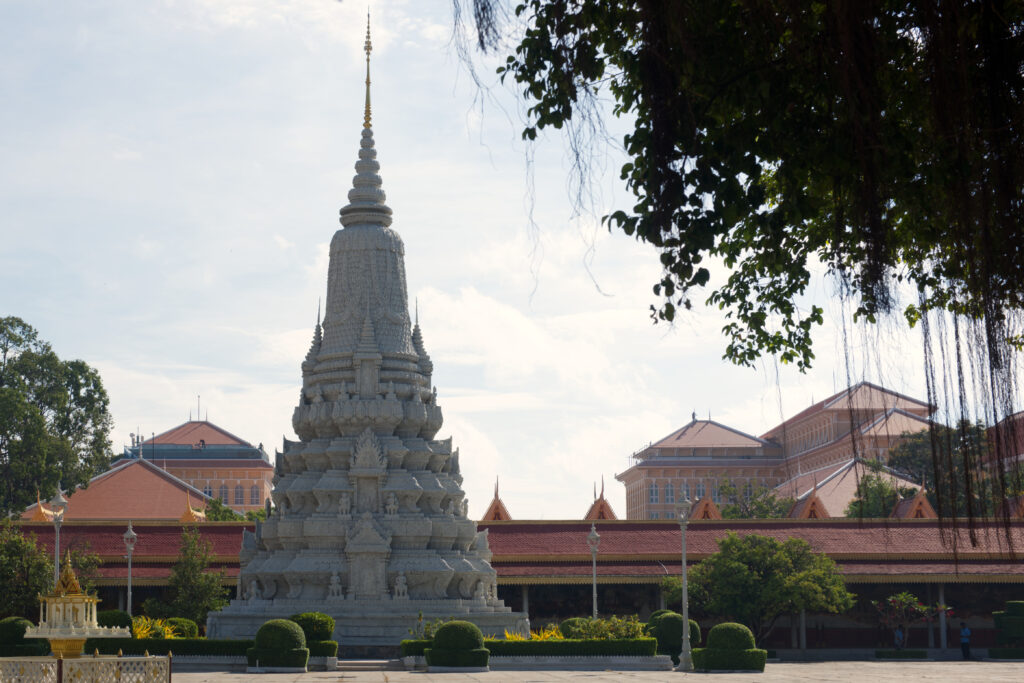
Next is the King Ang Duong Stupa, a striking white monument dedicated to the 19th-century monarch who sought to protect Cambodia’s territorial integrity in a time of mounting pressure from Thailand and Vietnam. Aware of the kingdom’s vulnerability, King Ang Duong began courting French interest as a strategic counterbalance.
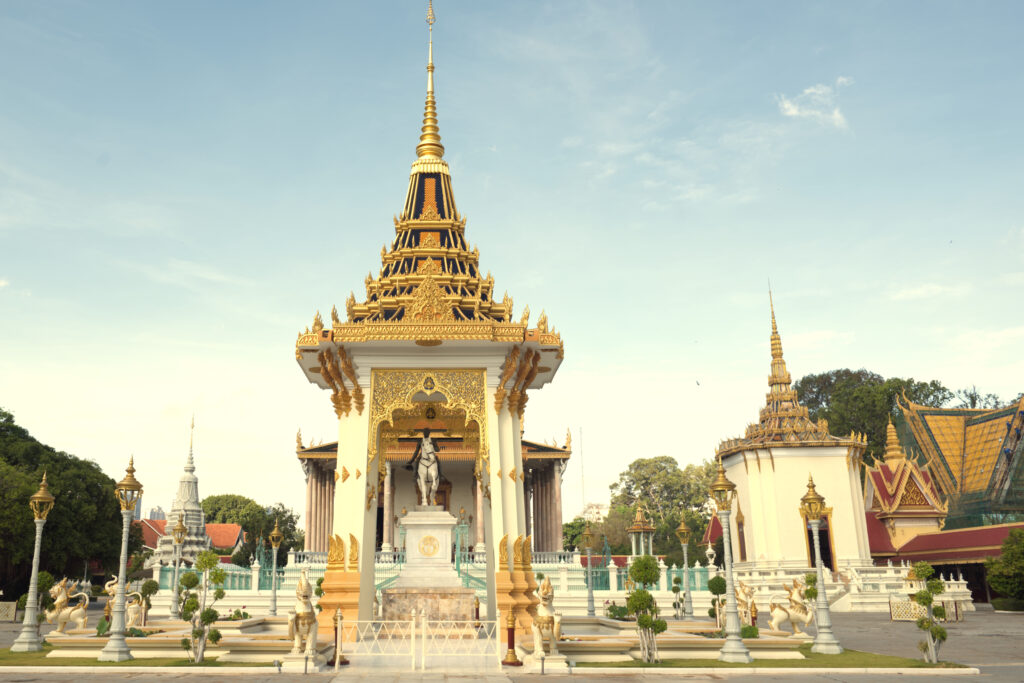
Finally, there’s the equestrian statue of King Norodom, a tribute to one of Cambodia’s most consequential rulers. Building on the diplomatic groundwork laid by his father, King Ang Duong, Norodom signed the 1863 protectorate treaty with France. The decision was controversial, as it brought Cambodia under colonial rule, but it also protected the kingdom from further territorial losses. Although Cambodia’s sovereignty was reduced, the treaty helped preserve its cultural identity and laid the groundwork for future diplomatic gains.
In 1907, as part of those gains, French negotiations resulted in the return of Battambang, Siem Reap, and Sisophon, provinces in Cambodia’s historic northwest that had been under Thai control for over a century. Siem Reap, home to the Angkor temple complex and once the seat of the Khmer Empire, held particular symbolic and cultural importance. These regions remain part of Cambodia today, a lasting outcome of Norodom’s decision to align with France.
Ultimately, I wish I could say I thoroughly enjoyed the visit, but by late morning it was already blisteringly hot and unlike other tourist sites I’ve seen, there were no self-guided tour or audio guide available. I could have joined a live tour, but I generally hate those, so I ended up aimlessly wandering around, photographing landmarks without much context. That said, that’s on me.
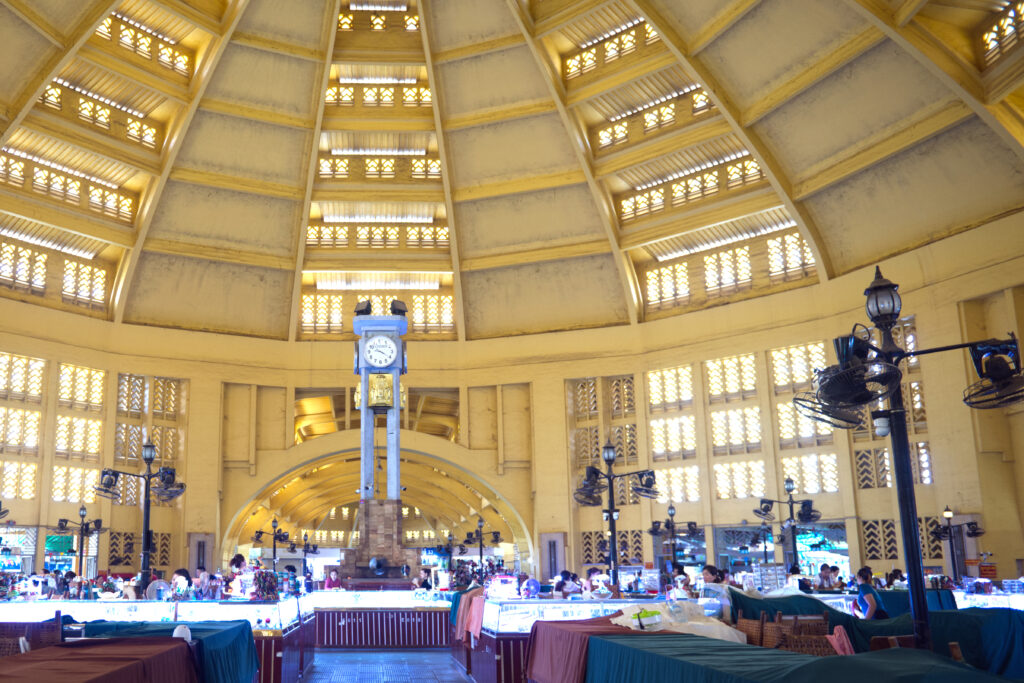
Afterward, I dropped by Phnom Penh’s Central Market, a massive yellow landmark built in the 1930s, with a distinctive dome at its center and four long wings branching out like a giant X. The building itself feels almost futuristic in shape, yet aged and worn from decades of use. Inside, the space buzzes with activity, rows upon rows of tightly packed stalls sell everything from gold jewelry and knockoff watches to fresh fruit, live poultry, and textiles.
By the end of my visit, I walked away with a few small items. Normally, I love bargaining, it’s part of the fun. But this was one of the rare times I didn’t bother. Sure, I could’ve saved a few bucks, but I thought, what’s a dollar or two to me, compared to what it might mean to them? So I let the vendors keep the difference.
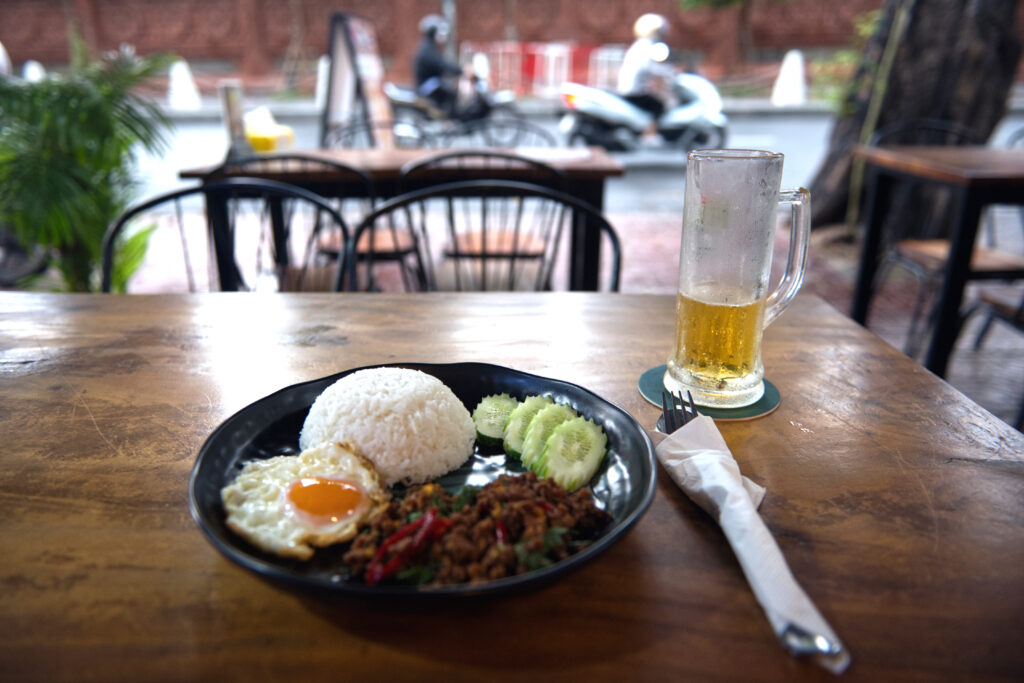
Since arriving in Cambodia, I’ve been sticking to a more structured routine, one that includes a mid-day nap to avoid the worst of the heat. Today, I woke to the sound of a torrential downpour, the kind so intense it rattled the windows and pulled me from sleep. Fortunately, there was a break in the clouds just long enough for me to slip outside and grab dinner.
I had planned to take a leisurely river cruise later in the evening, but it was clear more rain was coming (and sure enough, it did!). So I called it a night. This would be my last dinner in Phnom Penh, until next time!


Comments are closed.