
June 6, 2023
Stories from China (Part 23)
By Simon J. Lau
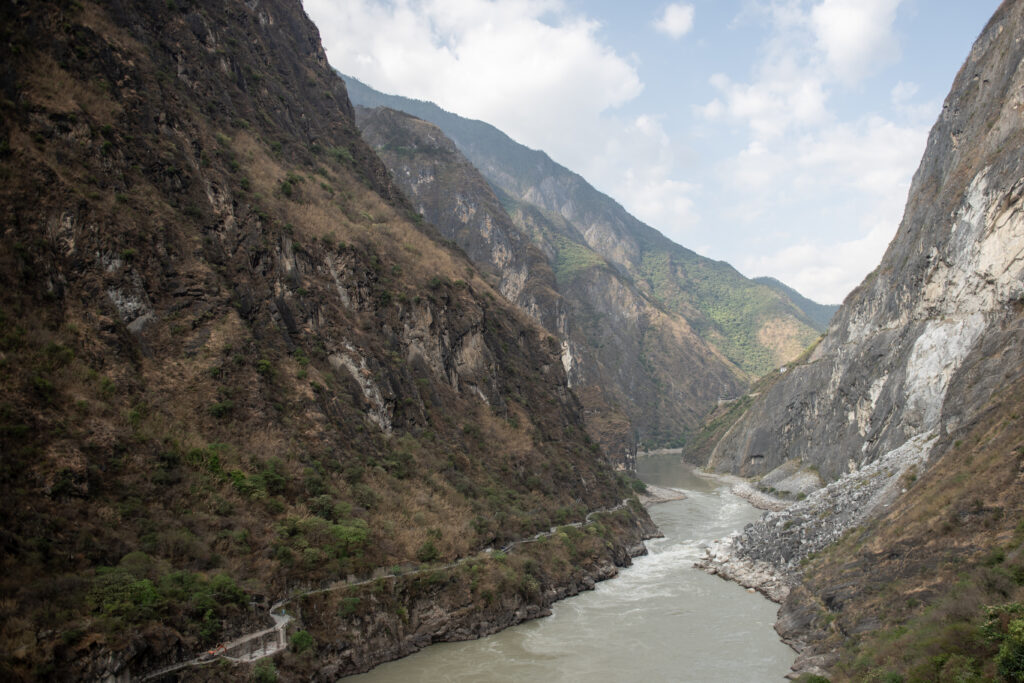
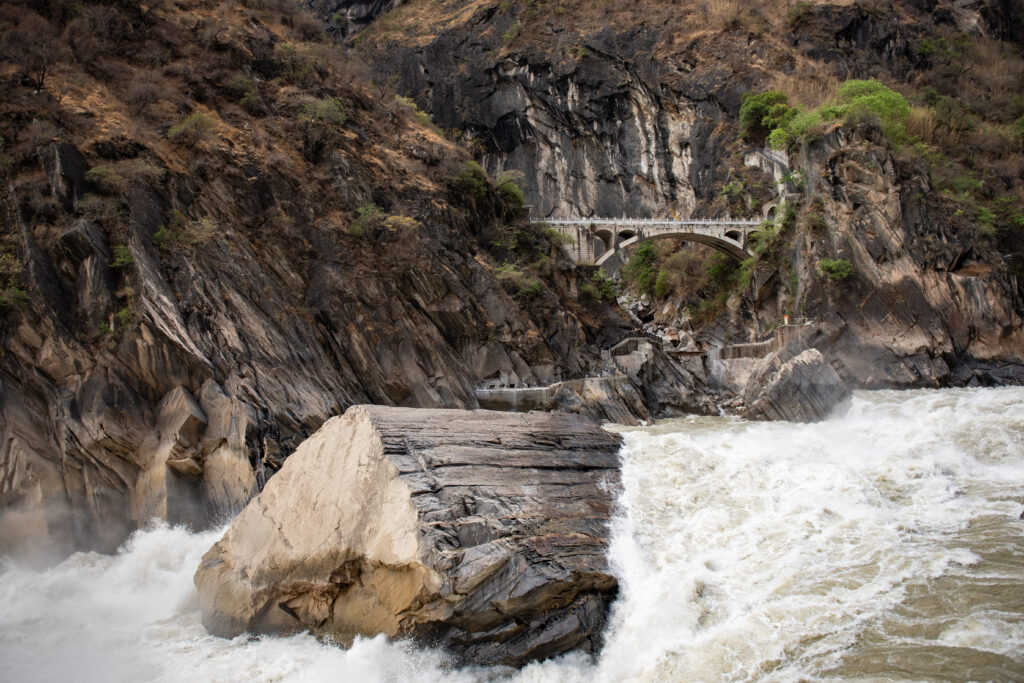
Today I took a tour through the broader Shangri-La region, which included a visit to Tiger Leaping Gorge. The gorge dramatically straddles the border between Lijiang and Shangri-La County, offering towering rapids and narrow cliffs along the Jinsha River. Mountains rise nearly 4,000 meters above the river on either side, creating sheer walls and narrow trails that cling to the canyon’s edges. It’s a place of staggering scale and natural beauty, famous among hikers and travelers across China.
This section of the gorge gets its name from a legend that a tiger, fleeing a hunting party, leapt across at its narrowest point, using a massive boulder in the river as a stepping stone. The hunters stopped in their tracks, astonished that the animal had cleared the raging waters. The tiger vanished into the mountains on the far side. Though said to be a legend, if it were true, that tiger deserved to live and forever remembered.
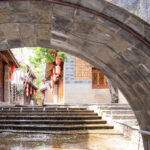
Next, we visited Dukezong, a historic town in Shangri-La. This area is part of the Diqing Tibetan Autonomous Prefecture, a region with deep Tibetan cultural roots. Much of what is now Diqing, including Dukezong, was part of the Tibetan Empire before it fell to the Qing dynasty in the 18th century.
Although it is no longer part of Tibet, many Tibetan ethnic minorities still live here, and the influence of their language, religion, and traditions is everywhere. Even my tour operator was Tibetan, sharing stories about the town’s history and what life is like for Tibetans in this part of Yunnan.
One of the first things I noticed in Dukezong was the colorful prayer flags fluttering in the wind. These flags, covered in Tibetan script and prayers, are believed to carry blessings on the breeze as they wave. Hung across courtyards, temples, and mountain paths, they added brilliant color to the area.
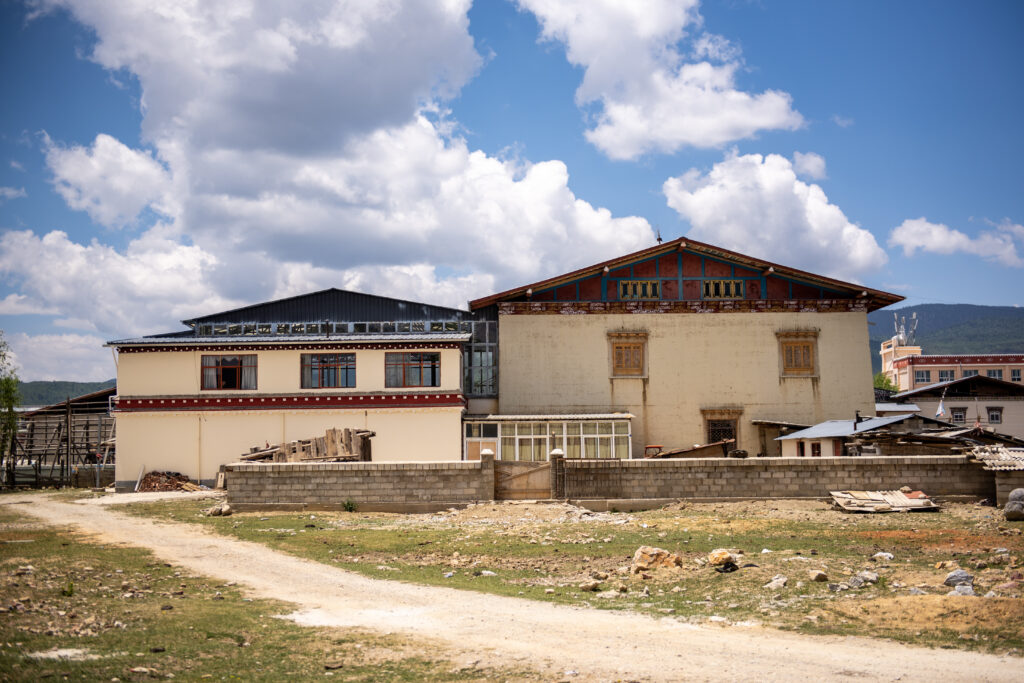
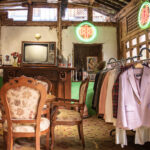
For lunch, we were invited to our tour operator’s home to enjoy a traditional Tibetan meal. His wife served up a small feast with bread, soup, veggies, jerky, and a bit of homemade moonshine. The kitchen setup was simple but traditional, the kind of space that felt both practical and lived in. They didn’t allow photos inside, but I took this picture of his neighbor’s home, which was very similar.
After the meal, the visit took an unexpected turn. His wife launched into an enthusiastic sales pitch for her teas, complete with stories, prices, and promises of health benefits. As the only foreigner in the group, I wasn’t the main focus, but we all had to sit through it before the tour finally moved on.
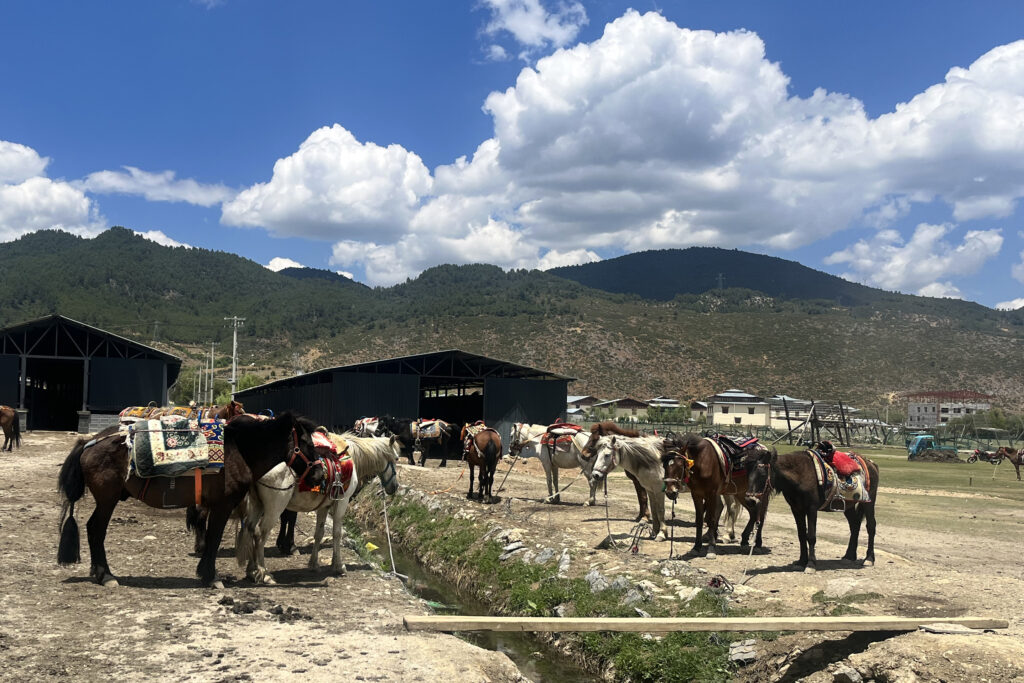
The sales pitch sadly continued at our next stop, a so-called grassland reserve. Instead of the scenic break we were expecting, it turned out to be a miserable place full of vendors aggressively pushing overpriced horse riding “experiences.” Many of the horses looked malnourished, some were injured, and all were clearly overworked.
Not surprisingly, few people in our group were interested. Only a mother and child bought a package, while the rest of us stood around awkwardly. My guide, frustrated by the lack of sales, even turned to me for help. It was a sad day when the unemployed foreign tourist became his last hope, but here we were. We wasted another hour waiting for the mother and child to return from their ride. It was the longest hour of my life.
During that time, my guide tried to educate me. He insisted that I wasn’t Chinese American, as I had always referred to myself, but simply Chinese. This brings up an interesting point. The Chinese language has a variety of words to describe “overseas Chinese.” The most general term, 华人, refers to “people of Chinese heritage,” regardless of nationality. Within this category, there is also 华侨, which specifically means “Chinese nationals residing abroad.” For the average layperson in China, these two terms are often conflated. However, because this is so relevant to my own background, I’ve spent a lot of time studying these distinctions. Occasionally, locals like to argue with me about it, but I know I’m right.
As we prepared our return, I realized I had spent more time listening to sales pitches than actually sightseeing. To bring the day full circle, I stopped at Luckin Coffee, one of the largest coffee chains in China. The company went public on Nasdaq in 2019, and less than a year later it was revealed that they had committed widespread accounting fraud. The stock quickly collapsed, and the company was eventually delisted. It felt oddly appropriate. My tour had been its own kind of fraud, with more nonsense than actual experiences, so ending the day with a Luckin coffee seemed almost poetic.
After that, I decided I will never buy another tour package from a basic Chinese operator. I was on the road for 14 hours and spent less than 2 hours actually seeing the sites I had paid for. To say I am a little salty about the experience would be an understatement. Final grade: D/D+.


Comments are closed.