June 18, 2023
Stories from China (Part 35)
By Simon J. Lau
The weather in Suzhou has been so lovely lately. Just kidding. Although, I can’t really complain. I hadn’t seen any intense rainfall since arriving in China, until now. The only way to escape it was to step inside a coffee shop. The thing is, very few coffee shops here open before 10 a.m. Coffee culture is growing in popularity in China, but it’s not really part of the morning routine.
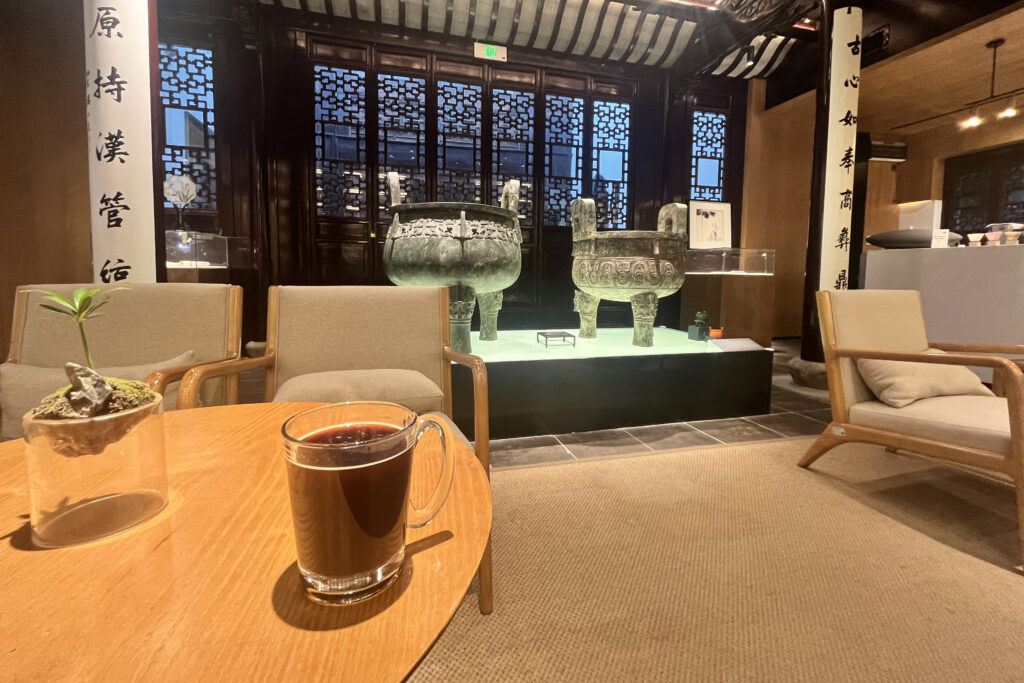
I did, however, find a shop inside the Cultural Salon of Suzhou. The coffee wasn’t great, but the space was fantastic. It took several hours for the storm to pass. That gave me a good reason to stick around.
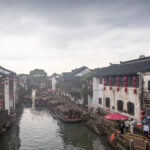
Afterward, I visited the Suzhou section of the Grand Canal. The Grand Canal is one of the great engineering feats of ancient China, a vast waterway stretching from Beijing in the north to Hangzhou in the south. Construction began as early as the 5th century BC, with different dynasties adding new sections over time until it became the world’s longest man-made canal.
Spanning roughly 1,800 kilometers (about 1,100 miles), the canal links China’s northern and southern regions, passing through eight provinces, including Jiangsu, where Suzhou is located. For centuries, it was the backbone of trade and transportation, moving grain, goods, and even troops between regions.
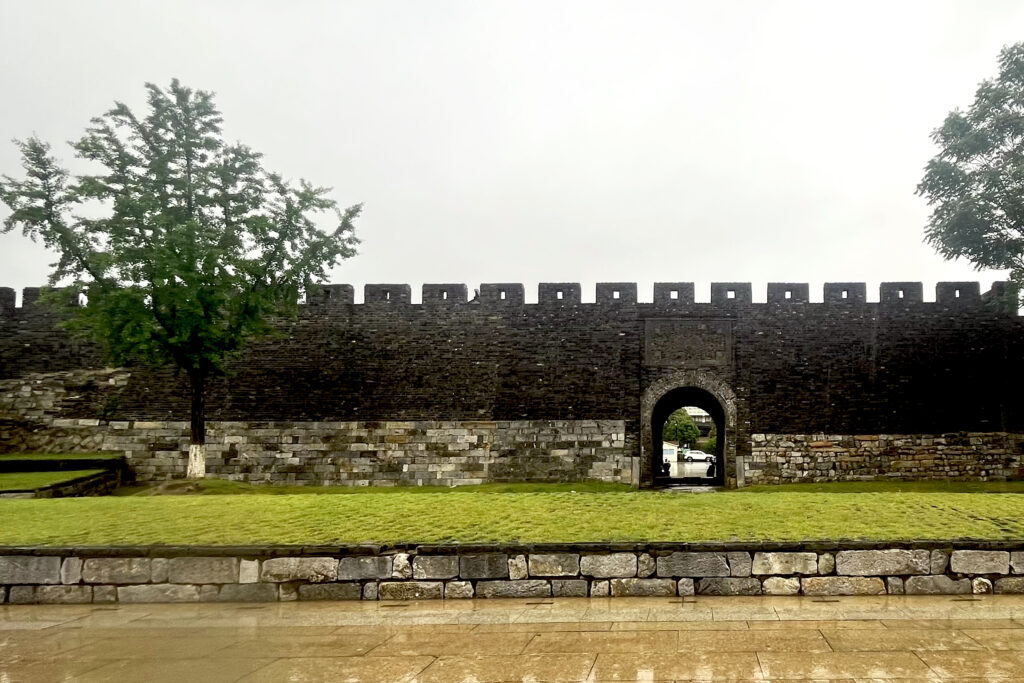
The Suzhou section was originally built as a moat around the ancient city, serving as its first line of defense against outside invaders. At the southwest corner of this stretch of the Grand Canal stands Xu Gate, one of eight city gates constructed to protect Suzhou during the Spring and Autumn period, a turbulent era in China’s history. The brick wall that surrounds it today is not the original but a renovated structure rebuilt by the Mongols during the Yuan dynasty.
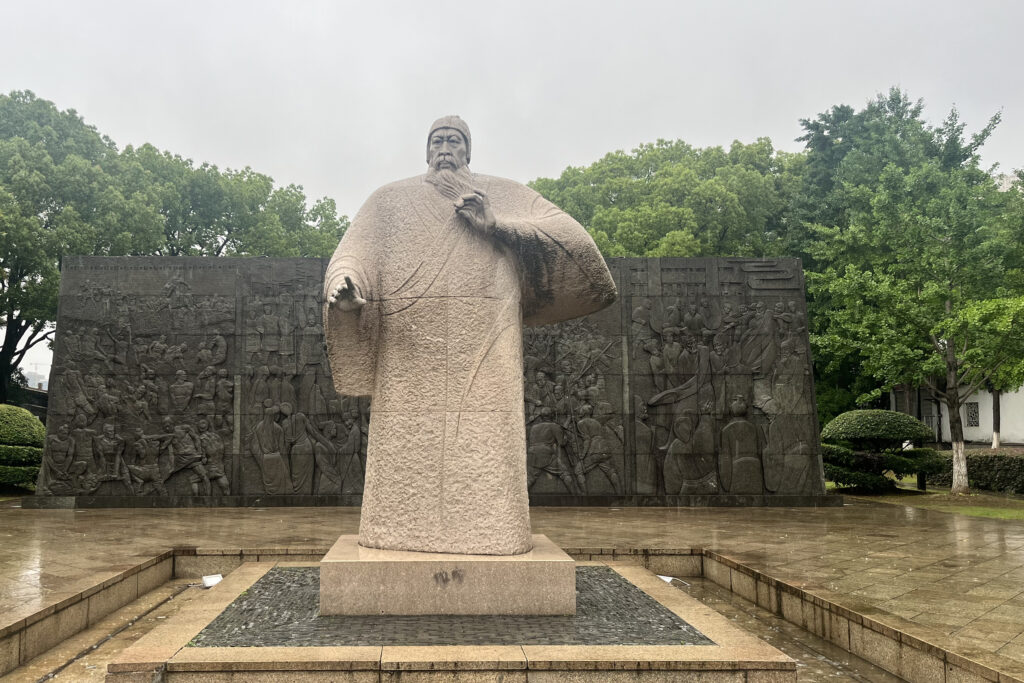
Just in front of this wall stands a statue of Wu Zixu, the man credited with founding Suzhou. According to legend, he was both a skilled military general and a sharp politician. However, he later fell out of favor with the king after disagreeing over how best to defend the city from the Mongols. Ordered to take his own life, Wu made a final request. That his eyes be removed and placed above Xu Gate so he could watch the advancing Mongol army capture the city.
Not long after this visit, the downpour continued. I returned to my hostel with my shoes completely soaked, which for me is always the worst part of a rainstorm, and I couldn’t bring myself to head out again. Instead, I called it a day and got some much-needed rest.


Comments are closed.