
April 19, 2025
Letters from Indochina (Part 20)
By Simon J. Lau
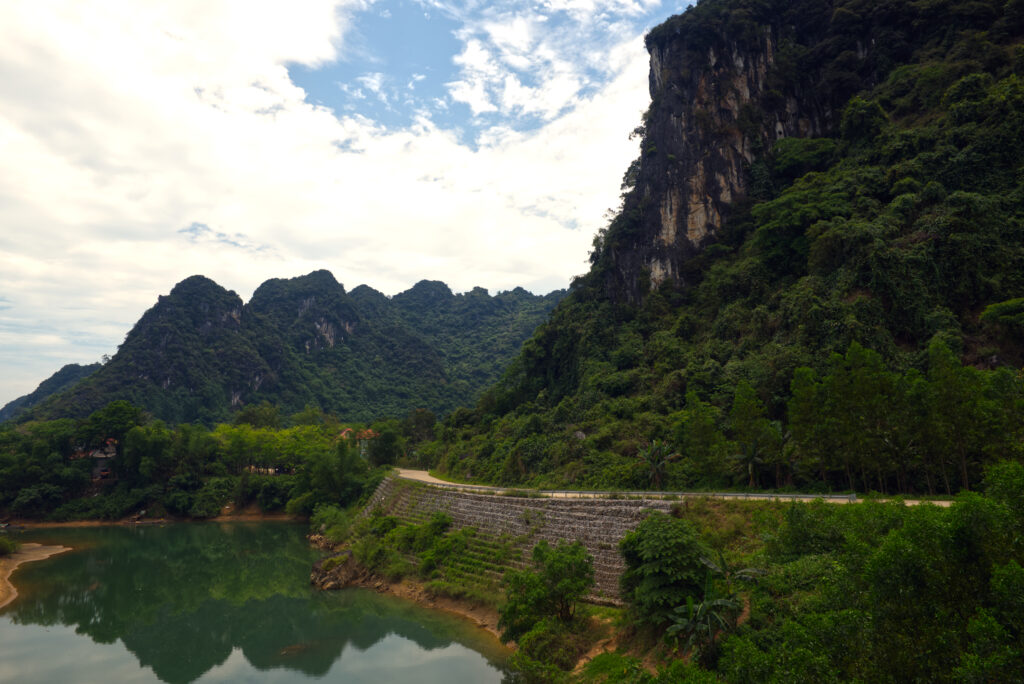
Phong Nha is a small, laid-back town in north-central Vietnam, famous for its dramatic limestone mountains, winding rivers, and, most of all, its incredible cave systems. It’s the gateway to Phong Nha-Ke Bang National Park, a UNESCO World Heritage Site and home to some of the largest and most spectacular caves in the world.
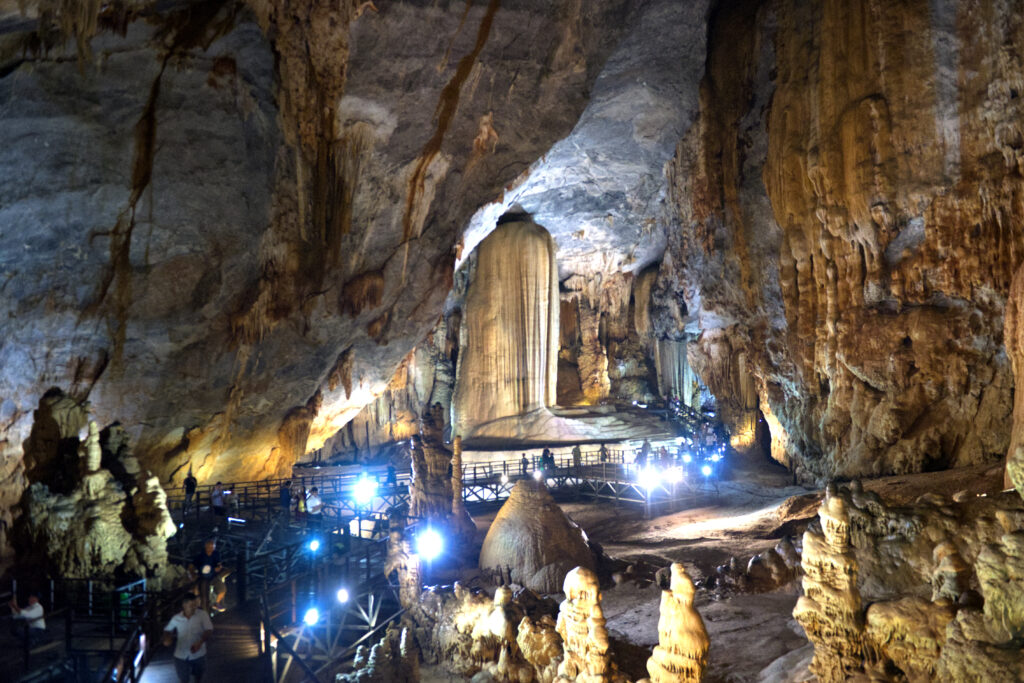
This morning I spent time in the park where I visited Paradise Cave, one of the area’s most popular attractions. Discovered in 2005, Paradise Cave stretches over 18 miles (or 30 kilometers) underground, with soaring cathedral-like chambers filled with intricate stalactites and stalagmites. (Stalactites hang from the ceiling like icicles, while stalagmites rise from the ground, both formed over thousands of years from mineral-rich water.) It’s one of the largest dry caves in Asia and is known for its sheer size and delicate formations.
Today was also my first time battling hordes of Vietnamese tourists. Honestly, they reminded me of Chinese tourists: loud, pushy, and aggressive. The tour guides were even worse. At the cave entrance, local guides were constantly trying to cut in front of me or shout over me when I tried to get the attention of the ticketing staff.
Unfortunately for them, I’m Chinese, which means I know how to be just as loud, pushy, and aggressive when the situation calls for it. I spotted a gap at one of the three ticket counters, slipped in before the next guide could shove past, and before he could interrupt, I threw up a hand to block him and started speaking in English to the attendant. No matter where I find myself in Asia, speaking fluent English always gets you better service. Add to it, as an American I wasn’t just about to fall behind hundreds of tourists about to swarm the caves because this dude got in my way.
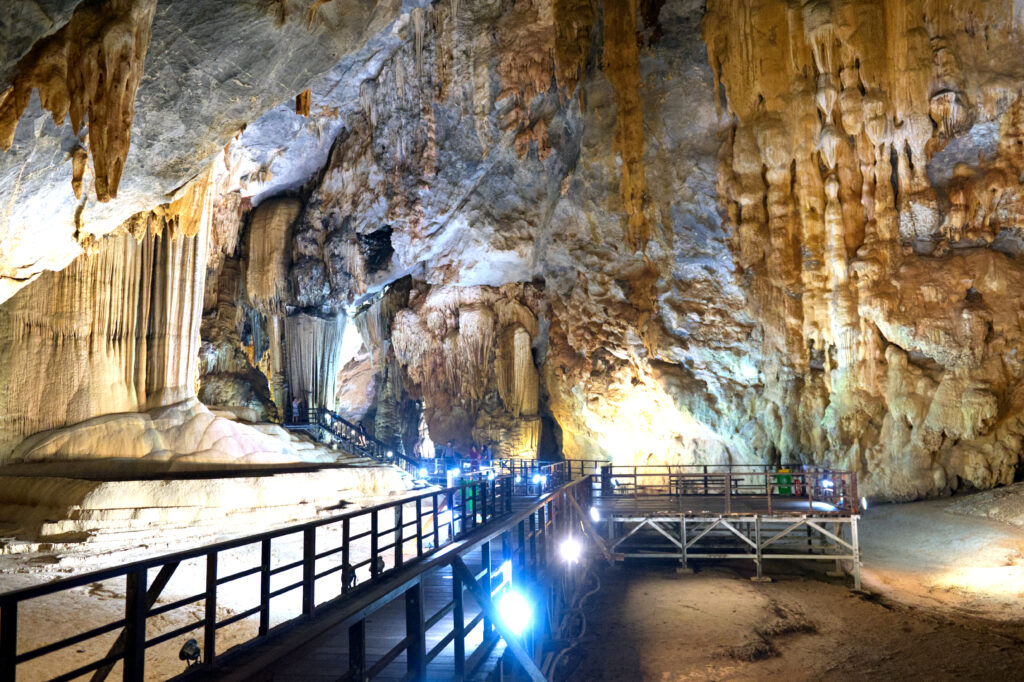
When I finally made it inside, the first thing I noticed was how cool the air was. For a second, I thought the caves were air-conditioned, but no, the constant coolness comes from the natural underground environment. Limestone caves regulate temperature very well, staying cool and humid year-round no matter how hot it gets outside.
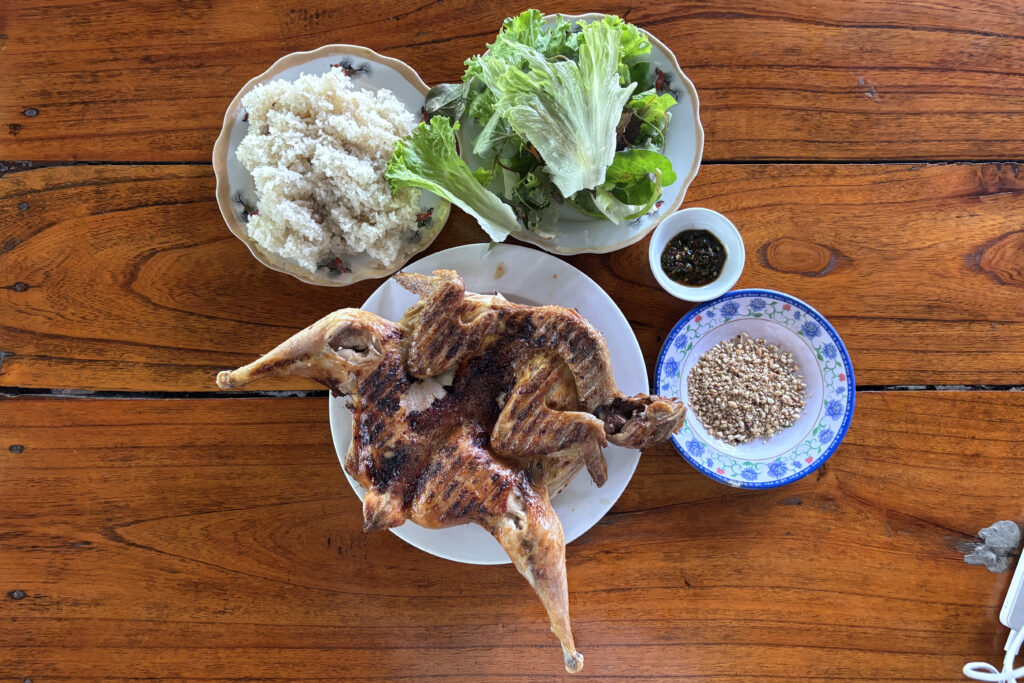
For lunch, I tried grilled chicken, or ga nuong muoi, a specialty in Vietnam’s mountainous regions. The chicken is typically cooked over an open fire and served with a salt mix that’s especially famous in Phong Nha. In this case, crushed peanuts were added. Normally, one order includes a whole chicken, but since I was by myself, I asked if I could just get half. They wouldn’t allow it, so I ended up with the whole chicken anyway. No problem, I just ate dinner at the same time. 😅
I really wanted to like it, but the meat was tough and far from tender. Thinking about it, though, it makes sense: these are truly free-range chickens, roaming rice paddies and eating bugs, unlike the plump, grain-fed birds we pump full of antibiotics back in America. If I lived here, I think I could get used to it. It’s healthier, although not as juicy.
I should add, it wasn’t easy finding a place like this. I stopped by three different restaurants before finally tracking it down. At the first spot, the daughter told me her dad (the chef) was “busy.” At the second, they had stopped serving this dish, though I couldn’t tell if that meant today or months ago. The server offered to cook me something similar, but I politely declined. Eventually, I found a restaurant tucked away off the highway on a little farm, where I was greeted by a flock of chickens and a giant rooster standing guard. That’s when I knew I had found the real deal.
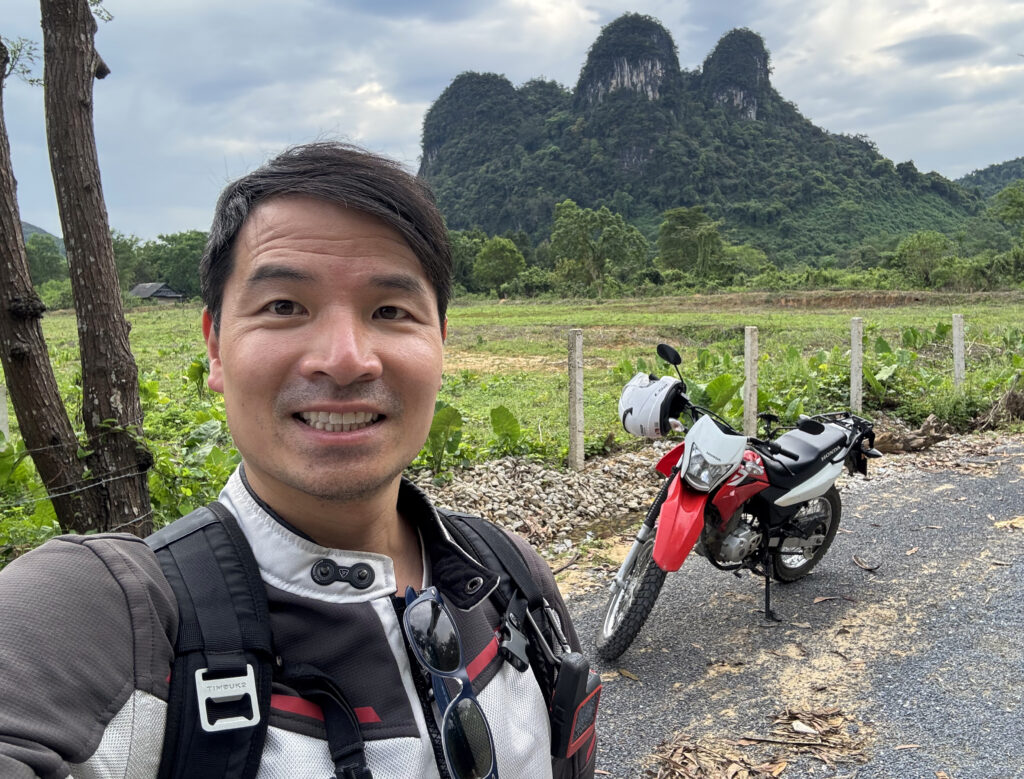
Finally, this was also my last day with my bike, Banh Mi. What she lacked in polish, she more than made up for in heart. She carried me from the breezy beaches of Da Nang, through the jungles and switchbacks of the Ho Chi Minh Road, and finally into the misty cave country of Phong Nha. Every mile (or kilometer, for my friends outside the U.S.) we covered felt like a small adventure of its own, and I couldn’t have asked for a better companion along the way.
I’ve thought about getting a bike like her before. The Honda XR 150 is a simple, rugged dual-sport that’s perfect for Vietnam’s rougher roads. It’s smaller and less powerful than the motorcycle I have at home, a Honda CRF 300L, but it’s lighter, lower to the ground, and much easier to handle. It might not be the perfect fit for me, but when the time comes, someone like her might just be the right one for Jean. 🙂 Then we could finally go adventuring together!
Farewell, Banh Mi! May you keep putt-putting down dusty roads, weaving through jungle switchbacks, and carrying new adventurers across this wild, beautiful country. Ride on, little warrior!
Comments are closed.