Coast-to-coast: San Francisco to Savannah (Part 27)
By Simon J. Lau
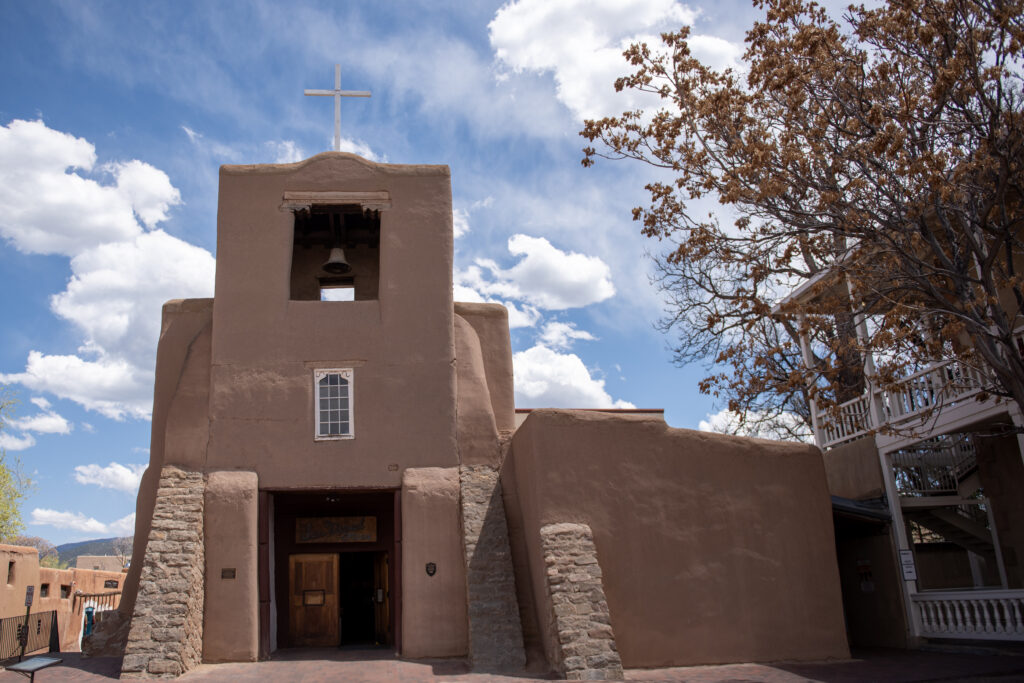
Santa Fe really punches above its weight. I grew to appreciate the adobe architecture. It’s not something I thought much about before, but here it blended seamlessly into the landscape. The city was also impressively clean and felt very livable. Honestly, I was surprised it hadn’t been overrun by remote workers. Whatever the case, I was glad it still felt a bit undiscovered. Here are a few moments that stood out during our stay
The Cathedral Basilica of St. Francis of Assisi is perhaps the most prominent building in Santa Fe’s Historic District. Built in 1886, its twin towers make it a defining feature of the city’s skyline. For more than a century, it has served as both a place of worship and a hub for community life, anchoring Santa Fe’s spiritual and cultural identity.
The Cross of Martyrs is a memorial with deep historical and cultural significance. Erected in 1920, it honors the 21 Franciscan friars killed during the Pueblo Revolt of 1680, a pivotal moment in the region’s history. The monument sits on a hill overlooking Santa Fe and the surrounding mountains. When we visited, the sky was overcast and gray, which gave the photos an added sense of drama.
As we departed Santa Fe, we hit heavy traffic caused by a large train derailment west of the city, near Gallup. By chance, I canceled a room reservation there in favor of one further west. I didn’t know about the derailment at the time, but I’m grateful for the change since non-residents weren’t allowed into Gallup today.
We left at 8 a.m. and, with breaks, didn’t reach our final destination until 5 p.m. This was the worst traffic we’ve faced on this trip. Still, there were moments of beauty along the way. In one stretch, a layer of fog clung close to the ground, drifting through the sagebrush and old wooden fences. It made the desert feel quiet, peaceful, and calm.
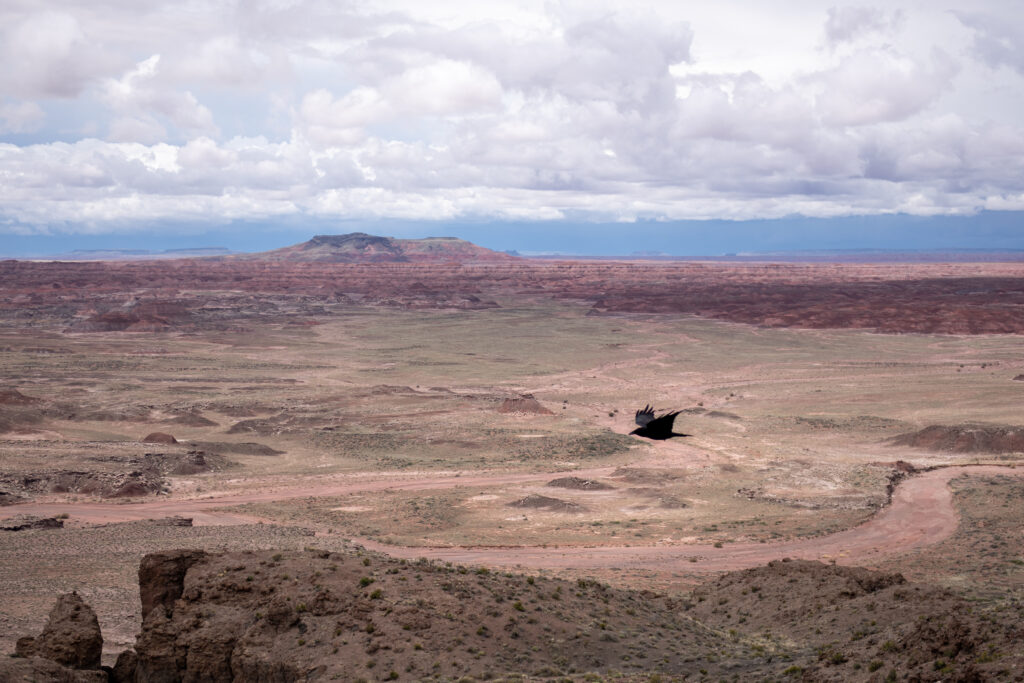
We also visited Petrified Forest National Park in northeastern Arizona, a place that truly lives up to its reputation as both a geological and paleontological wonder. The park is best known for its immense deposits of petrified wood, formed over millions of years, but its colorful badlands, mesas, and ancient petroglyphs also tell a deeper story of natural beauty and human history.
This was the first national park I’ve been to where dogs are allowed on pretty much all the trails, so Bruno and I took the chance to hike the Blue Mesa Trail. The area is known for its blue and purple tones from mineral deposits, and walking the loop gives you a close look at millions of years of layering and erosion. Even with the cold weather, we made it around and saw the colors up close. You can’t really tell from his face, but Bruno was very much into it.
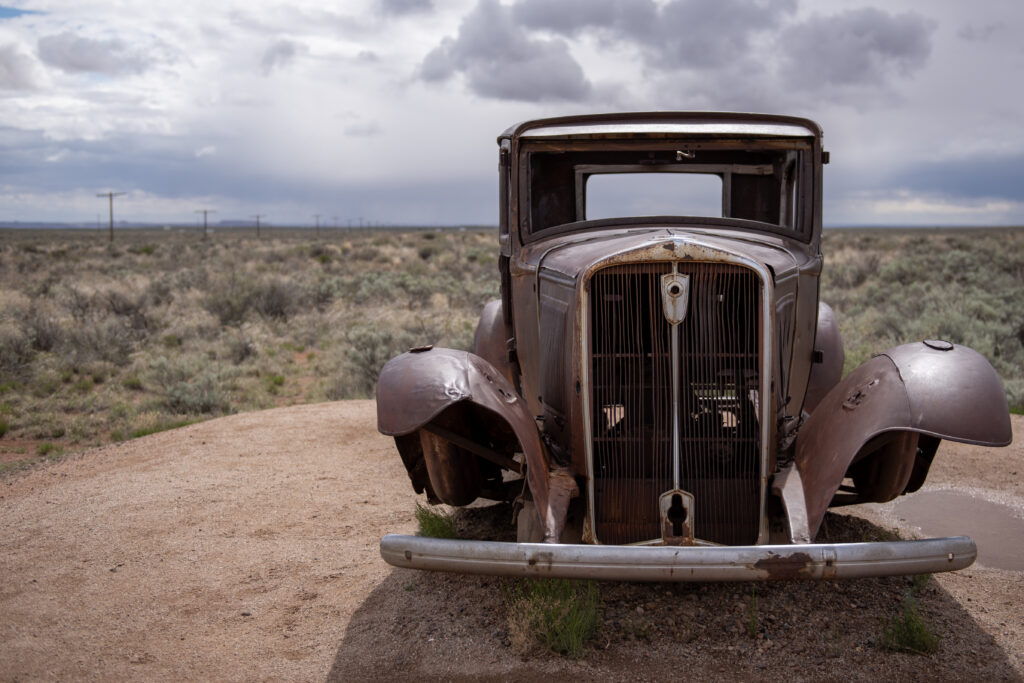
This 1932 Studebaker was donated to the National Park Service by Frank and Rhonda Dobell, owners of Arizona Automotive Service in Holbrook, Arizona. It marks a spot where historic Route 66 once cut through the park. You can still see the raised roadbed and telephone poles in the background tracing the original path.
In The Lincoln Highway, a book I recently finished, the main character drives across the country in a Studebaker. I used to think of these cars as museum pieces or luxury vehicles, but the more I encounter them, the more I realize they were much more of a mass-market automobile than I originally thought.
Leaving the park, I noticed unusual cloud formations. As I drove closer, they revealed themselves as pockets of heavy rain. The downpour hit so suddenly that even with my wipers on full speed they couldn’t keep up. Then, just as quickly as it began, there was a break in the rain. It was my first time experiencing weather like that on the road.
Finally, our route from Santa Fe to Holbrook (360 miles or 579 km).







Comments are closed.